
Home Blog Page 9

Digital Accessibility: Retail’s Next Competitive Advantage

0

As retailers look to the work ahead in 2026, digital accessibility compliance may well be on their radar. The threat of legal or regulatory action for non-compliance with laws like the Americans with Disabilities Act (ADA) and the now-enforceable European Accessibility Act (EAA) isn’t going away. But in retail, digital accessibility doesn’t just help organizations avoid compliance risk. It drives real impacts:

• 88% of retail professionals say accessibility gives them a competitive advantage.

• 97% say it improves customer satisfaction.

• 80% say it boosts acquisition.

• 94% say it increases revenue.

These stats from our seventh annual State of Digital Accessibility Report, make it clear that retailers have begun to understand accessibility as an important advantage. And this is no surprise, when thought about in practical terms:

• An e-commerce checkout flow with an inaccessible promo field leads to abandoned baskets.

• A loyalty app update that isn’t navigable to a customer using a screen reader leads to support center spikes.

• An inaccessible store locator means customers won’t hesitate to take their business to your competitor across the street.

Accessibility drives usability—it is at the core of the user experience. When incorporated strategically, it can spark design innovations that enhance the appeal of digital assets and maximize potential customer reach. That reach is fast becoming a crucial differentiator in crowded categories where product and price differentiation has become more difficult.

But despite retail professionals recognizing these advantages, not every organization has been able to consistently embed best practice to reap these benefits. More than two-thirds of the global retail professionals we surveyed reported their organizations were involved in legal or regulatory action related to digital accessibility complaints in the past year. In the age of omnichannel retail, where digital portfolios are scaling across e-commerce sites, mobile apps, loyalty platforms, digital kiosks, and in-store digital touchpoints, practical challenges and competing organizational priorities often leave retail leaders with insufficient time, resources, and crucially, processes to address accessibility issues.

Accessibility is no longer compliance work; it is a growth lever that expands markets and improves experiences for every customer.

The Promise of AI

In light of all this complexity, AI is emerging not just as an efficiency driver, but as an accelerator for digital accessibility in fast-moving digital environments. At Level Access, for example, we’ve embedded AI into our market-leading testing, remediation, and reporting capabilities to accelerate safe and reliable accessibility at scale. Our research shows budgets dedicated to digital accessibility are on the rise, and that many organizations are seeking AI-powered solutions as part of their strategy. Nearly every retail professional (96%) we surveyed said AI capabilities will be a key consideration when purchasing accessibility solutions this year.

AI is helping automate much of the manual, time-consuming work that previously slowed progress in digital accessibility efforts. Of course, when trained on an organization’s goals and data, it supports efficient auditing and faster remediation cycles. It’s also helping organizations to embed accessibility knowledge in daily processes, ensuring that standards are met consistently, and allowing for easier progress reporting.

However, especially when it comes to accessibility, AI cannot replace lived experience and human guidance. As our Chief Accessibility Officer Jonathan Avila has explained,

“While AI tools and automation are transforming accessibility, a balanced approach … is essential. Designers, developers, and content authors must continue to strive for accessibility from the outset, complemented by AI-driven aids and endpoint solutions that improve efficiency to ensure that all content is universally accessible.”

Investing in people and processes

So, while retailers looking to seize their competitive advantage should absolutely invest in AI-powered solutions, this should be done alongside an investment in people. Training and education are vital to help teams understand how to incorporate best practices and advanced tooling effectively within their roles.

According to our research, where accessibility training is “highly effective,” organizations are 2.5 times more likely to approach accessibility proactively. And from our 2024 survey, we know that retailers who approach accessibility proactively are 50% more likely to say it has contributed to “much improved” revenue.

In our experience working with the world’s leading retail and e-commerce brands, good education improves accessibility governance. It ensures conformance with established standards is being accurately monitored and progress is being made against the organization’s overarching accessibility goals. This ultimately means accessibility investment is sustained, maximizing an organization’s return on investment over time.

Boosting business outcomes: How to play your part

As retailers look to gain an advantage, this blend of AI efficiency with human oversight and upskilling will help retailers meet rising consumer expectations and head off legal risk. But accessibility champions cannot do this game-changing work alone. Our research shows that where executives are “highly supportive” of digital accessibility, respondents were almost seven times as likely to say that digital accessibility contributes to improved revenue for their organization.

When senior leaders champion accessibility, teams gain the clarity, resourcing, and cross-functional commitment needed to make progress stick. It signals that accessibility isn’t a legal or technical afterthought, but a strategic business priority.

For retail executives, this support can take several practical forms:

• Set clear expectations: Include accessibility in strategic plans, digital roadmaps, and KPIs across product, design, engineering, and store operations.

• Model accountability: Request regular visibility into accessibility performance, just as you would for conversion, NPS, or operational efficiency.

• Champion a culture of inclusion: Encourage teams to incorporate lived experience from people with disabilities, customer feedback, and user testing into everyday work.

• (If and how you can) Allocate sustainable resources: Fund the tools, training, and governance needed for continuous improvement—not one-off fixes.

When executive involvement is visible and consistent, retail brands stop playing compliance catch-up, and start driving outcomes. And while it may be tempting to believe that accessibility issues will “solve themselves” with the rise of AI, the reality is much more complex. The accessibility advantage for retail brands is only attainable when AI solutions are combined with an investment in training and strong governance, and accessibility programs are given the executive support they need. This approach will ensure accessibility compliance standards are maintained, and the good work being done by retailers to acquire and retain customers continues—no matter what the digital landscape has in store for us next.


The Overlooked Revenue Opportunity Retailers Must Unlock in 2026: B2B

0

Retailers are heading into 2026 with familiar pressures. Industry reports show shoppers are becoming more selective and prioritizing purchases that feel worth the money. These shifts in what, where and how people buy are being shaped by social influence and the digital platforms guiding discovery and decision-making. Inflation, agentic adoption, evolving tariffs and tight margins also remain part of day-to-day planning.

Most leaders respond with a mix of tools. They sharpen promotions, lean harder on forecasting and keep investing in eCommerce channels. All that matters, but there is another growth lever sitting outside the typical merchandising and marketing conversation: Business buyers.

Retailers already have them in their checkout, but there’s an opportunity to move from passively serving those buyers when they show up, to intentionally targeting them. Especially since in the U.S., B2B eCommerce site sales are on track to top $3 trillion by 2028, according to eMarketer.

B2B retail growth depends on removing payment friction, not adding complexity to already strained financial workflows.

The next growth segment is already in your checkout

Once you look at these buyers as a defined segment, the value becomes clear. Research shows 95% of business buyers use corporate credit cards at least once a month. For larger or recurring purchases, more than half say they prefer to pay by invoice, or buy on terms, rather than pay at the point of sale. For retailers, these are buyers who place larger orders at a steady cadence, offering more stable and reliable revenue over time.

Many retailers already serve small businesses, schools and local organizations through existing eCommerce channels and in store. The shift is to recognize them in your checkout, invite them into a business program and make sure the payments experience fits in with how they manage cash flow.

For most of these buyers, the shopping journey is similar to how they shop in their non-business lives. It often starts with the same search, navigation and product pages built for everyday shoppers. The difference shows up at payment and after the sale. They care about payment choice, invoicing and the clear visibility into spend so they can reconcile charges quickly.

Payment choice builds loyalty for B2B buyers

For years, B2B commerce lagged the consumer world when it comes to checkout, but that gap is closing. Business buyers expect the same simple, flexible experience they get in their personal lives, but it but it accounts for the added complexity of business purchases.

In this environment, payments choice is not a nice-to-have. It should sit at the center of the experience. B2B transactions often involve larger orders, approval workflows and procurement rules, so a single default payment method will not work for every account.

Research shows 72% of business buyers are more loyal to companies that provide their preferred payment options and 51% would switch merchants for flexible terms. Another 86% say having their preferred payment option is important and many will walk away if it is not available.

These buyers still use corporate cards because they are simple and familiar. But when the order is larger or recurring, many prefer to buy with net terms so offering both options is imperative. Pay by Invoice lets approved buyers place an order today and receive a detailed invoice later that supports recordkeeping, procurement and cash flow. According to a recent report by Flagship Advisory Partners, SMBs gain working capital flexibility by using net terms as a financing tool, while large enterprises consolidate many purchases into a single monthly payment, simplifying approvals and reconciliation.

Retailers that tailor payment options by buyer segment make it easier for those customers to keep coming back.

What does it take to capture business buyers?

The same Flagship analysis, which looked at the NRF Top-30 U.S. retailers and Top-20 E.U./ U.K. retailers, uncovered corporate buyer programs are becoming increasingly prevalent. Some retailers have developed sophisticated, tailored solutions for business customers, while others continue to manage corporate buyers like consumers, overlooking the revenue opportunities.

What separates the leaders is how they operationalize the program. They lean on automation behind the scenes to make B2B purchasing consistent and scalable, rather than a series of one-off exceptions. An intentional B2B program means validating buyers, assessing credit risk, issuing accurate invoices and seamlessly managing collections.

When those steps are handled manually, they are often slow and error-prone. Business buyers feel that right away. They run into long onboarding processes, invoices that do not match negotiated pricing and confusing dispute paths. The result is abandoned applications, delayed orders and, in some cases, lost relationships.

Retailers need an intentional approach to attract and retain business buyers. Instead of building a full credit and collections operation from scratch, they can standardize and automate key steps in the order-to-cash process so approvals are faster, Pay by Invoice works the same online and in-store, and invoicing and reconciliation become routine. The technology or partner model will vary, but the goal is the same: give B2B buyers the same smooth experience as any other customer, with added control over credit, invoicing and reconciliation.

2026 is the right time for a strategic B2B focus

In 2026, treating B2B as a core part of the retail strategy is a practical way to build revenue. It starts with recognizing business buyers in the checkout, offering them the payment choice they expect and making sure the mechanics behind the scenes are as well designed as the front end of your eCommerce site.

The Great Retail Glow Up: How Experience, Payments, and AI Are Redefining Loyalty

0

For the last decade, the retail narrative has been simple: stores are fading, e-commerce is inevitable, and convenience wins every time. That story no longer reflects what we’re seeing on the ground. In conversations with retailers across the country — and in Adyen’s latest retail research — a different picture is emerging: physical retail isn’t just alive; it’s evolving, and in many cases, outperforming digital when it matters most.

During Black Friday, for example, in-store transactions averaged 28% higher value than online purchases. Shoppers aren’t drifting into stores out of habit or necessity, they’re going intentionally, and they’re spending more when they do. That means that the retailers winning right now are the ones paying attention to how consumer expectations are shifting, sometimes in surprising ways.

Why Shoppers Are Choosing Stores Again

Despite all the taps, swipes, and same-day delivery promises, shoppers still love a good old-fashioned try-before-you-buy moment. Forty percent of consumers go in-store specifically to see, feel, and test products before purchasing. For Boomers and the Silent Generation, that number can reach 70%.

Loyalty today is earned through flexibility across channels, inventory, and payments, where every connected system helps retailers close sales and retain trust.

But confidence in knowing what they’re purchasing isn’t the only draw to returning to stores. Thirty-four percent of shoppers say they genuinely enjoy the in-store experience, while another 34% value the instant gratification of walking out with their purchase in hand. No shipping delays, no porch piracy, and no return labels.

There’s also the practical side of in-store shopping to consider. With shipping fees creeping higher, economics are certainly playing a role in shopping choices. Forty-two percent of Boomers say avoiding shipping costs is a primary reason they shop in person, this drops to 28% for Millennials.

Ultimately, today’s shoppers want the confidence of physical retail paired with the speed, flexibility, and personalization they’ve grown used to online. And that’s where the pressure really starts for retailers.

Welcome to the Impatience Economy

Retailers are investing heavily to get shoppers through the door—beautiful stores, curated assortments, knowledgeable staff. But nearly half of those efforts can fall apart in the final moments of the journey at checkout.

We’ve grown accustomed to everything happening in an instant, which means our tolerance for friction is basically zero. Thirty-nine percent of shoppers will abandon a purchase if payment takes too long, and 49% will walk away if they can’t use their preferred payment method.

Nearly half of shoppers are leaving, not because they didn’t want the product, but because paying for it was too hard.

The challenge for retailers? Consumers now use 10+ different payment methods, with preferences split across debit (36%), credit (18%), cash (18%), and a rapidly growing mix of digital wallets. During Black Friday alone, digital wallet usage at the point of sale jumped from 21% to 33% year over year.

Payment choice isn’t a perk anymore, it’s a prerequisite.

Checkout is the Experience Now

Retailers are seeing what’s happening and adapting fast. According to our 2026 Retail Report, self-checkout usage climbed to 59%, up 13% year over year, with Gen X and Boomers—yes, Boomers—leading adoption. Mobile handheld terminal usage also nearly doubled, jumping from 14% to 27%, allowing associates to close sales anywhere on the floor.

These shifts mean that payments aren’t just infrastructure anymore, they’re the final impression shoppers are left with. The last five feet of the store can either reinforce everything that came before or undo it completely.

Loyalty Lives (or Dies) in the Details

To shoppers, there’s no “before checkout” and “after checkout.” It’s all one seamless experience, or one broken one.

Nearly half of Americans say they prefer retailers that remember their preferences and personalize the experience. Loyalty also rises when flexibility is built into the journey: 60% are more loyal to retailers that offer buy online, return in store, and another 60% say loyalty increases when out-of-stock items can be ordered in store and shipped to their home.

Put simply, loyalty today is earned through flexibility across channels, inventory, and payments. When systems are connected, stores can still close the sale even if the shelf is empty. When they aren’t, customers don’t just leave empty-handed, they leave frustrated.

AI Enters the Chat and the Checkout

At the same time, a much bigger shift is quietly reshaping how people shop. AI is no longer just suggesting what to buy, it’s starting to buy for us.

Fifty-one percent of U.S. shoppers are open to letting AI handle the entire purchase process on their behalf. AI shopping assistant usage has nearly tripled year over year, rising from 12% to 35%.

This marks a massive shift from “AI helps me browse” to “AI just takes care of it.” It’s one of the biggest behavioral changes we’ve seen since the rise of e-commerce.

It’s become impossible for retailers to ignore, and 88% are open to agentic commerce, and more than half call it a top strategic priority. But there’s healthy caution too, around data security, costly mistakes, and losing direct customer relationships.

The retailers who win won’t be the ones who resist AI or blindly hand everything over to it, they’ll be the ones who use AI to simplify decisions, remove friction, and strengthen trust, while staying transparent and accountable.

The Retailers Who Win from Here

The future of retail isn’t physical versus digital. It’s friction versus flow.

Shoppers want stores that inspire, checkouts that disappear, payments that adapt to them, and technology that works quietly in the background. Physical retail’s second act is already underway, with stores becoming experience hubs while AI and modern payments handle the transactional heavy lifting.

The retailers who earn loyalty in 2026 won’t do it with a single innovation. They’ll do it by getting hundreds of small moments right, especially the last one.

In a world defined by impatience, choice, and expectations, every second counts and every tap matters.

Rethinking Loyalty for the Way Customers Live Today

0

Over the years, I’ve watched loyalty programs evolve through many phases. Points programs became digital. Digital became mobile. Mobile became personalized. And yet, despite all of that progress, many retailers are still asking the same question: Why does loyalty feel harder to earn than it used to?

Today’s customers are thoughtful and intentional. They decide where to engage, where to spend, and where to stay based on what makes sense for them right now. Loyalty programs are no exception. Customers are quietly evaluating whether a program is worth their attention by asking simple, practical questions: What does this give me? How does it make my life easier, better, or more rewarding today?

When programs struggle to answer those questions clearly, customers don’t necessarily complain; they disengage.

Loyalty That Moves With the Customer

The most effective loyalty programs today don’t stop at the register or live only inside an app. They move with the customer across physical and digital touchpoints, showing up in ways that feel natural rather than forced.

Strategic partnerships are essential. Partnerships shouldn’t feel bolted on or transactional—they should align with how customers already spend their time and what they already value. For example, a retailer might start by rewarding shoppers through its own loyalty program, then extend value by allowing customers to redeem points within a bank’s loyalty program, a wellness app, or other lifestyle services they already use. By meeting customers where they already engage, loyalty shifts from managing a program to supporting meaningful, ongoing relationships.

That said, there’s still an emotional element to loyalty. Customers enjoy feeling recognized and appreciated. But that recognition needs to feel genuine. Customers are quick to sense when loyalty is being engineered rather than earned.

Loyalty today is earned through relevance and recognition, not discounts that train customers to wait for the next deal.

Loyalty as a Shared Value Exchange

One of the most important shifts retailers need to acknowledge is that customers don’t organize their lives around brands. They move between work, family, wellness, finances, travel, and leisure, often all in the same day. Loyalty—when it works—fits into that broader rhythm rather than asking customers to step outside of it.

Loyalty can no longer be treated as a self-contained marketing tool. It has become a shared value exchange: customers bring their attention, data, and engagement, and in return, they expect relevance, flexibility, and benefits that feel useful beyond a single transaction. Many retailers feel pressure to deliver everything on their own; every perk, every experience, every benefit. That expectation isn’t realistic, and customers know it. The brands that are performing best are the ones that recognize their role within a larger ecosystem and design loyalty accordingly.

Here’s what that looks like in practice:

Meet customers where they are. Understand their lives, routines, and the moments that matter, then deliver value that fits naturally.

Focus on experiences, not just transactions. Customers increasingly care about wellness, convenience, lifestyle perks, and flexibility.

Expand through partnerships. Strategic alliances allow brands to deliver value that feels broader and more relevant without trying to be everything to everyone.

Make value obvious. Transparency is the new baseline. Customers want to see benefits, outcomes, and savings in real time.

For example, as an industry, we often point to Apple as one of the gold standard brand examples. Not because it has a traditional points program, but rather because it has a loyal following. They have a devoted customer base that eagerly seeks out the latest products, and when opportunities arise to gain additional value, which can be through partnerships, promotions or bundled experience, they become more motivated to engage and purchase. Apple’s loyalty comes from being present where it matters, and showing up across customers’ lives versus asking customers to chase rewards.

The lesson here is that retailers need to think more expansively. Customers don’t live within a single brand’s four walls, and loyalty programs shouldn’t be limited there either. Strategic partnerships and network expansion allow retailers to deliver value that feels broader, more relevant, and more human — without having to be everything to everyone.

Making Loyalty Feel Meaningful Again

Traditional earn-and-burn mechanics still have a place, but on their own, they no longer sustain long-term engagement. Discounts and points may drive short-term purchases, but they rarely create meaningful connections. Customers respond far more strongly to experiences that feel personal, purposeful, and connected to their lives beyond the transaction.

Rewards should be reimagined as extensions of everyday life, not just incentives to spend. Few retailers can deliver wellness, lifestyle, and experiential benefits on their own partnerships make loyalty richer, more human, and relevant. When points and perks are earned, experienced, and woven into everyday life, they create lasting engagement and emotional connections.

For example, a retailer could offer access to wellness workshops, meditation apps, or curated fitness classes. Or a program might provide early access to lifestyle experiences, flexible redemption options, or services that reduce everyday friction like grocery delivery credits or health-focused perks.

When loyalty feels tied to how customers live—supporting healthier routines, reducing stress, or giving back time—it becomes more engaging and easier to trust. A loyalty program that helps a customer book a yoga class, track wellness goals, or redeem points becomes meaningfully a part of a customer’s lifestyle.

Loyalty is a Relationship, Built Over Time

At its core, loyalty cannot truly be calculated or derived from the metrics of a campaign, solely. It’s a relationship that develops when customers feel understood, respected, and in control of how they engage.

We’re entering a new chapter in how loyalty is built, and trust will be the most meaningful measure of success. Brands that respect their customers’ intelligence, make value easy to recognize, and design programs that reflect how people actually live (not how we wish they would) are the ones that will build lasting loyalty and customer journeys that truly work.

When loyalty fits naturally into a customer’s world, it doesn’t need to be pushed. It’s simply chosen.

Microsoft Propels Retail Forward with Agentic AI Capabilities that Power Intelligent Automation for Every Retail Function

0

Microsoft Corp. on Thursday announced agentic AI solutions designed to bring intelligent automation to every part of the retail business. These new capabilities help retailers move faster, serve shoppers with greater relevance, and operate with resilience and efficiency, delivering a modern foundation for growth in a highly competitive market.

Across merchandising, marketing, store operations and fulfillment, these solutions bring a connected layer of intelligence that transforms fragmented workflows into coordinated execution. By equipping teams with context-aware tools that can anticipate and act, Microsoft is accelerating the industry’s move toward a unified, intelligence-driven operating system built for the pace of modern retail.

“The retailers that thrive will be the ones that unify their business with intelligence that reaches every corner of the value chain,” said Kathleen Mitford, Corporate Vice President of Global Industry at Microsoft. “With Microsoft’s agentic AI, retailers can automate what slows them down and amplify what sets them apart, enabling faster decisions and stronger customer relationships while building operations ready for whatever comes next.”

Turning inspiration into action with agentic commerce 

AI is significantly changing how consumers shop for gifts. Adobe unveiled that AI‑driven ecommerce traffic for the 2025 holiday season has surged by 693% compared to 2024. This increase illustrates the importance of connecting authentic brand engagement with frictionless checkout, helping retailers capture value at the exact moment of intent. 

Copilot Checkout will enable merchants to reach shoppers as they complete purchases discovered directly within Copilot without being redirected to external sites. Copilot Checkout turns conversations into conversions — instantly. No redirect, no friction, and merchants stay the merchant of record. Copilot Checkout is now available in the U.S. on Copilot.com. Trusted partners enabling this experience include PayPal, Shopify and Stripe. Shoppers will be able to purchase from leading retail brands such as Urban Outfitters, Anthropologie and Ashley Furniture, and discover unique and handmade items from Etsy sellers with many more joining soon. 

“At Etsy, our job is to make it simple for people to discover the special things our sellers create. By bringing Etsy’s unique inventory to Copilot Checkout, we’re meeting buyers at the moment intent becomes action,” said Rafe Colburn, Chief Product and Technology Officer at Etsy. “With one integration, we open the door for our sellers to show up across new surfaces without extra work. It’s a straightforward way to connect their creativity to high-intent buyers — and to keep commerce human as shopping evolves.”

Shopify merchants will automatically be enrolled in Copilot Checkout following an opt-out window. “Copilot Checkout can move a customer from intent to transaction in seconds, all without leaving the conversation. It’s the merchant’s checkout powered by Shopify, seamlessly fitting into the customer’s experience,” said Mani Fazeli, VP of Product at Shopify. “This is the modern power of Agentic Storefronts: personalization and relevance, trust and accuracy, speed and convenience.”

Driving loyalty and conversions through intelligent shopping agents 

Microsoft is introducing two solutions that bring agentic commerce to life across the digital experiences retailers own: Brand Agents, now available for merchants on the Shopify platform, and the personalized shopping agent template in Copilot Studio. Both enable personalized, conversational shopping experiences, helping retailers guide customers, boost engagement and drive conversions.

Brand Agents is a turnkey solution for brands to bring their authentic voice into every digital interaction on their website. Trained on a brand’s product catalog, it answers detailed product questions, engages shoppers in natural, brand-aligned conversations, and is ready for Shopify customers to deploywith minimal setup. 

The personalized shopping agent template provides a fully customizable framework for retailers wanting to tailor experiences more deeply. In addition to real-time, context-aware product discovery and recommendations across web, mobile and in-store experiences, it includes advanced capabilities such as outfit building and more, giving retailers flexibility to craft unique engaging shopping journeys. 

“Microsoft’s personalized shopping agent template gives us a flexible foundation to explore AI-powered guidance in a way that fits our brands, improves the customer experience and helps customers get inspired,” said Jenny Jidborn, IT Manager at Kappahl Group. “It supports our ambition to improve conversion while also reducing returns through better decision support at the product level — ultimately helping customers feel more confident and satisfied with their choices.”

Enabling smarter discovery and recommendations through catalog enrichment  

Microsoft is also launching in public preview the catalog enrichment agent template in Copilot Studio, an intelligent assistant that extracts product attributes from images, enriches them with social insights, and automates catalog tasks such as product onboarding, categorization and error resolution. Serving as a foundation for agentic commerce and a new lever for merchants, this customizable template transforms product data into enriched, structured data that fuels discovery, recommendations and hyper-personalized shopping experiences across channels. 

 “With Microsoft’s catalog enrichment agent template forming the backbone of our personalized shopping experiences, we can turn product details into meaningful insights that help shoppers discover styles in real time, receive tailored recommendations and explore complete looks,” said David Torrecilla, Head of Innovation at Guess. “It’s a powerful step forward in our commitment to delivering service that’s as dynamic as our brand.” 

Empowering store associates and streamlining store operations for faster service and better customer experiences 

Retailers continue to grapple with high turnover and a shortage of skilled frontline staff. Many employees lack access to digital tools that could help them serve customers more effectively and efficiently. Microsoft’s new agentic AI solution is designed to change that by empowering employees with intuitive, on-demand assistance. 

Store operations agent template in Copilot Studio, now in public preview, empowers store leaders and associates with a natural language interface for quick answers on inventory availability and store policies, while autonomously orchestrating workflows, flagging exceptions and recommending next best actions. By analyzing internal signals like sales trends and foot traffic alongside external factors such as weather, local events and holidays, it delivers contextual recommendations for staffing, KPIs and operational priorities. The intelligent agent helps leaders make smarter, faster decisions. 

“With the store operations agent template, we’re advancing our AI strategy by enabling teams to act on live store insights,” said John Khoury, Group CTO at Strandbags. “The flexibility to shape the agent around our specific needs ensures our teams can focus on delivering exceptional service while we stay ahead in a fastmoving retail world.” 

Microsoft’s new agentic AI solutions mark a turning point in the era of agentic AI for retailers, giving them the tools to anticipate change, operate more efficiently and deliver experiences that truly reflect their brand values. Intelligent agents help automate critical retail workflows from inventory management and product onboarding to real-time merchandising insights, freeing teams to focus on strategy and innovation while driving measurable business outcomes. By combining deep enterprise integration with responsible innovation, Microsoft is helping retailers build stronger businesses and lasting customer relationships for the future. 

Start by exploring retail agent solutions in Microsoft Marketplace and learn more about Microsoft for Retail here. To experience these solutions in action, visit Microsoft and its customers and partners at NRF 2026 at booth #4503. 

Microsoft (Nasdaq “MSFT” @microsoft) creates platforms and tools powered by AI to deliver innovative solutions that meet the evolving needs of our customers. The technology company is committed to making AI available broadly and doing so responsibly, with a mission to empower every person and every organization on the planet to achieve more.

Quiet Quitting v Default Loyalty: Why Brands Are Losing Customers They Thought They Owned

0
Sara Richter, CMO at SAP Emarsys

At NRF 2026, Sara Richter, Chief Marketing Officer at SAP Emarsys, will unveil new insights from the SAP Emarsys Customer Loyalty Index (CLI) and Buyer Loyalty Index (BLI) that quantify a widening difference between stated loyalty and actual behavior.

“Quiet quitting has come to retail, and its B2B counterpart is Default Loyalty,” said Richter. “Both look like loyalty but are fragile. The reason? Internal complexity rather than a lack of intent. Every brand wants to engage better but many are not yet able to do so.”

Enter “dark data”: the signals brands already collect but can’t activate because they’re trapped in disconnected systems across technology, service, marketing and revenue. It’s not lost or ignored, it’s unusable in real time without an intelligence layer. “That’s why AI matters,” Richter added. “AI connects those signals so brands can deliver personalized, connected experiences across every touchpoint, every time.”

The Loyalty Gap in Numbers

B2C (CLI 2025):

  • 77% say they “love and trust” a favourite brand, yet:
    • 57% switch for a better price
    • 52% leave after a poor experience
    • 33% walk following a controversy
    • 24% exit over sustainability concerns
      Customers rarely complain; they quietly disengage—opening fewer messages, purchasing less often, then switching.

B2B (BLI 2025): 71% of buyers claim loyalty—yet 70% of that is Default Loyalty: staying because switching is painful, not because the value is strong. When integration barriers fall or a superior offer appears, inertia evaporates.

Why Now: Budgets are tight, expectations are higher, and journeys are fragmented. Despite oceans of data, over half of brands say their data is too unstructured to use, and a similar amount cannot act in real time. The result: faith‑based loyalty instead of evidence‑based engagement, because the signals that predict churn sit in silos.

“This is the essence of what has become known as the Engagement Era,” said Richter. “Understanding how customers engage beyond transactions and using one intelligence layer to interpret signals across technology, service, marketing and revenue in real time. Traditional marketing platforms weren’t built for that.”

Molton Brown: Molton Brown is already putting connected engagement into practice. By unifying data and upgrading to SAP Commerce Cloud and SAP Emarsys, the brand now delivers seamless, personalized journeys across channels – helping drive a 20% uplift in repeat purchases, 5× more revenue from email, and contributing to a 30% increase in sales with record omnichannel performance.

From Dark Data to Daylight: Four Actions for 2026

  1. Activate Dark Data — Unify signals across technology, service, marketing and revneue to spot early disengagement (price sensitivity, friction, values clashes) before it becomes churn.
  2. Convert Default to Strategic Loyalty — Use predictive analytics and AI‑driven personalization to anticipate needs, scale relevance and turn inertia into intentional commitment.
  3. Deliver Connected Experiences — Eliminate fragmented touchpoints: one customer, one journey, one view.
  4. Build Values‑Based Engagement — Treat ESG and sustainability as procurement criteria; align proof points to the segments that care most.

The AI Advantage: Even as 63% of consumers express data privacy concerns, brands that deploy transparent, ethical AI to power real‑time personalisation gain a measurable edge. 95% of B2B buyers say AI positively influences loyalty.

November Retail Sales Remained Steady but Critical Holiday Shopping Weeks Lack Momentum, Reports Circana

0

Overall retail spending held steady in November, with 1% growth and flat unit demand, but spending on necessities like food continues to take priority, and elevated prices are eroding the consumer’s discretionary spending ability. In the combined four weeks ending Nov. 29, 2025, overall U.S. retail sales revenue grew 1%, while unit demand remained flat once again compared to the same time in 2024. Retail food and beverage sales revenue rose 2%, and unit sales were up 1%. Non-edible consumer packaged goods dollars were up 1%, while unit sales declined 1%. Discretionary general merchandise retail dollar sales declined 2%, and unit demand fell 4% compared to the same period a year ago, according to Circana, LLC.

Marshal Cohen, chief retail industry advisor for Circana

“Consumer prioritization is resulting in very specific pockets of growth at deeper levels within retail that are falling short of creating broader momentum,” said Marshal Cohen, chief retail industry advisor for Circana. “Flat discretionary general merchandise sales so far in the fourth quarter of 2025 are revealing the pressure on consumer’s wallets, as well as the diminished impact of the peak holiday shopping weeks.”

November closed out with the week of Black Friday, which brought a nearly 3% decline in dollar sales of discretionary general merchandise and a 5% decline in units. Cyber Week kicked off December with a dollar sales decline of 1.3% and units falling 4.4%. Combined, the two shopping weeks ending Dec. 6, 2025, resulted in a 2% dollar decline and a nearly 5% unit drop from last year.

The very specific pockets of growth at the category level means very few industries are outperforming last year’s results thus far. The list of winning categories was similar for both Black Friday and Cyber Monday weeks, including categories like toy building sets, beauty products, and arts and crafts products, demonstrating how the two events and the roles of physical stores and e-commerce are blending when it comes to promotions, timing, and product focus. Instead of seeking out the hot new items, newness is coming from lifestyle classification — gifting products related to an individual’s hobbies and interests.

“The distinction between Black Friday and Cyber Monday has been lost — shopping during this holiday season has become even less about coveting the deal and more about curating ideas around what to give as gifts,” said Cohen. “Uniqueness, innovation, convenience, and socialization are now all critical to the formula for holiday selling. This is a trend that will continue into 2026 and needs to be ingrained in holiday 2026 planning.” 

RELEX Solutions Acquires Ida to Strengthen Unified Fresh Store Ordering Capabilities

0

RELEX Solutions today announced it has acquired Ida, a French SaaS company specializing in AI-driven fresh replenishment and store ordering optimization for loose products such as fruit, vegetables, bakery, meat, seafood, and prepared foods. The acquisition enhances the RELEX AI-driven planning platform with additional store-level capabilities for fresh replenishment covering the full spectrum of grocery categories – from center store, fresh, and ultra-fresh.

Ida, headquartered in Paris with customers across France and Western Europe, provides its AI-native fresh optimization platform to leading grocers including Auchan, Coopérative U, Naturalia, and Biocoop. With rapid adoption among top European grocers, Ida brings valuable expertise in fresh replenishment and store execution that complements RELEX’s end-to-end supply chain and retail planning expertise.

Fresh categories are central to every grocer’s success yet remain among the most complex to manage, with high volatility, short shelf life, and fragmented data from loose variable-weight items sourced across diverse supplier networks. Ida’s platform delivers accurate daily forecasts and AI-driven trading recommendations, guiding store teams on how much to order and providing in-store production plans. This enables grocers to reduce waste, maintain availability, and improve labor efficiency at the store level.

Ida’s category-specific capabilities will integrate into the RELEX unified platform to give grocery retailers a single planning environment that connects store operations with supply chain execution from supplier to shelf across all product categories.

Mikko Kärkkäinen, Group CEO and Co-Founder, RELEX Solutions

“Fresh products have always been the hardest category to get right, where waste, availability, and margin meet daily reality,” said Mikko Kärkkäinen, Group CEO and Co-Founder, RELEX Solutions. “By integrating Ida’s advanced fresh replenishment capabilities, we’re helping grocers act faster and smarter across every category. We warmly welcome the Ida team to RELEX.”

The acquisition strengthens the RELEX platform with new AI-based capabilities designed for fresh and ultra-fresh optimization:

  • Enhanced AI forecasting and ordering for perishable and loose items
  • Automated recommendations for store associates and managers
  • AI-assisted production planning for meat, seafood, bakery, deli and prepared foods
  • Improved DC and supplier forecasting for upstream visibility
  • Centralized dashboards for HQ performance monitoring

Together, these capabilities will form RELEX Fresh Store Ordering and strengthen RELEX In-store Production Planning, providing grocers with a unified environment for category-level optimization and execution, bridging the gap between store operations and retail planning.

“Joining RELEX is a once-in-a-generation opportunity to redefine how the world manages fresh food,” said Mateo Beacco, CEO and Co-Founder of Ida. “Together, we are creating the global standard for fresh optimization, reducing waste at scale, boosting availability, and empowering every store team with AI that delivers measurable impact from day one.”

Ecommerce Enters a Defining Year: 5 Predictions for 2026

0
5 MultiChannel Predictions for 2026

An expert discussion among leaders from ChannelEngine, Salsify, and ZEOS by Zalando highlights 2026 as a defining year for global ecommerce. AI-driven discovery, marketplace diversification, and social commerce acceleration are reshaping how consumers search, compare, and purchase products.

Emerging trends point to a rapidly shifting digital landscape in which brands and retailers must modernize their operations, product information, and channel strategies now or risk falling behind.

Jorrit Steinz, CEO of ChannelEngine

“Brands that scaled successfully this year were the ones that approached multichannel selling strategically,” said Jorrit Steinz, CEO of ChannelEngine. “They built strong foundations with unified product data, scalable operations, and the right technology partners, then expanded quickly. The biggest losses came from slow decisions, manual processes, and internal misalignment between teams. With AI accelerating everything, those gaps appear earlier and are far more costly. If brands don’t adapt now, they’ll struggle to compete in 2026.”

  1. Get your product data right, or AI will hide you

    AI is rapidly reshaping product discovery as more consumers begin their shopping journeys with conversational tools. These algorithms scan product content across marketplaces, brand sites, reviews, and social channels. Amazon’s Rufus already influences 40% of purchase decisions on the platform.

    Brands with accurate, aligned product data performed well in 2025, while those relying on outdated information lost visibility. Although only 5% of LLM traffic is currently product-related, panelists agreed this is an early phase, and AI-driven disruption will accelerate significantly in 2026.
  2. Amazon alone won’t be enough, growth shifts to niche and regional marketplaces

    While global marketplaces continue to scale, the fastest growth is happening across regional and category-specific platforms. In fashion, home, beauty, electronics, and value retail, consumers increasingly favor curated marketplaces that reflect local preferences.
  3. Be active on social commerce, or you’ll miss your next customers

    Consumers increasingly begin their shopping journeys on TikTok, Meta, and livestream platforms instead of traditional search engines. User-generated content and mobile-first discovery are influencing purchase decisions at scale. It will be essential for brands to meet consumers wherever they choose to explore.
  4. Operational speed and reliability will directly dictate marketplace ranking

    Rising delivery expectations, stricter marketplace standards, and regional carrier preferences mean legacy fulfillment models are no longer sufficient. Marketplace algorithms now reward delivery speed, stock reliability, and service performance, directly tying operations to ranking and conversion.

    In 2026, automation, unified fulfillment, and real-time inventory visibility will be baseline requirements for scalable growth.
  5. Inventory will need to move in real time as demand shifts across channels

    Static seasonal planning is giving way to real-time inventory orchestration. Brands must dynamically allocate stock across channels to maximize profitability and avoid stockouts.

Balancing 1P and 3P models and aligning B2B, marketplace, and D2C teams internally will be a major factor in marketplace success.

Why this matters now

The convergence of AI, marketplace diversification, and social commerce marks a turning point for digital commerce. Brands that deliver consistent product experiences across multichannels and invest in agility and automation will be best positioned to compete in 2026.

ChannelEngine supports this transition by connecting brands and retailers to more than 1,300 marketplaces worldwide through a single platform that centralizes product data, inventory, orders, pricing, and fulfillment, enabling scalable marketplace expansion and sustainable international growth in an increasingly complex commerce environment.

Square and Thrive Expand Partnership to Simplify Multi-Channel Inventory Management for Retailers

0

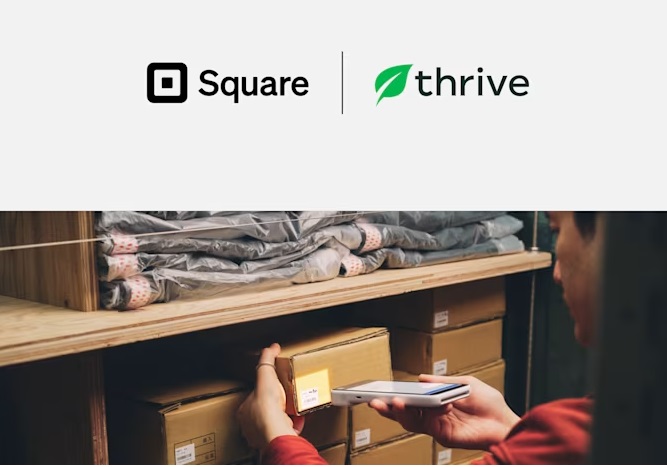
Square today announced that it has expanded its partnership with Thrive, the leading inventory management reporting system, to give sellers a seamless way to manage their catalogs, sales, and stock between their in-store and e-commerce platforms, including Shopify. The new integration enables retailers to create and edit products within Square, and have those updates automatically reflected on Shopify. With Square serving as the source of truth, sellers can avoid overselling, automate re-ordering, and save time managing multiple systems.

Having a dependable and scalable inventory management system is essential for the success of local businesses, particularly in the lead-up to busy periods like the holiday season. Alongside surging e-commerce, it is important for retailers to maintain a strong neighborhood presence and engage their in-person community at this time of year. With 50% of Square retail sellers operating across channels, keeping shelves stocked, orders accurate, and customers happy is complex. The new Thrive integration helps retailers sync in-store and online channels – reducing manual reconciliation and freeing them to focus on delivering great customer experiences.

“Sellers today increasingly operate across channels, but keeping them in sync shouldn’t multiply their workload,” said Morgan Kuntze, Global Partnerships Lead at Block. “Our partnership philosophy is to ensure sellers can seamlessly run and grow their businesses with Square, while also using their preferred industry and channel-specific tools. Our new Thrive integration makes it easy for retailers who use both Shopify and Square to enjoy seamless channel management – so they can spend less time reconciling their systems and more time connecting with customers.”

The new Thrive integration introduces a simple, reliable way for Square retail sellers to manage their Shopify e-commerce operations. Key features include:

  • Unified catalog management: Create and edit catalog items in Square, which automatically syncs to Shopify for consistent product listings.
  • Real-time inventory updates: Stock quantities adjust bi-directionally between Square and Shopify to avoid overselling or stock discrepancies.
  • Square as the source of truth: All updates to catalog data can begin in Square, to maintain accurate reporting and analytics for every channel within one comprehensive destination.
Bach Le, CEO of Thrive

“Thrive Inventory eliminates back office guesswork by automating real-time updates between Square and Shopify. This integration stops costly stockouts and overselling dead in their tracks, ensuring merchants execute their busiest seasons with absolute precision instead of relying on constant manual oversight,” said Bach Le, CEO of Thrive.

Square’s new integration with Thrive was built for:

  • Sellers of retail products operating both in-store via Square POS and online via Shopify.
  • Businesses that operate a single Shopify storefront and one Square fulfillment location, but may have multiple Square locations.
  • Businesses that want to maintain Square as their system of record while syncing product data and stock levels across multiple platforms.
  • Local retail sellers looking to centralize their operations to save time on manual purchasing and stocking processes.

“With our business operating across channels, keeping Square and Shopify in sync was one of our highest priorities,” said Daniel Janelle, Owner of Puzzled in Albuquerque. “Thrive’s integration solved that instantly – now our inventory, catalog, and reporting all stay consistent, which means fewer errors and more time focused on serving our customers.”

Upcoming Events